
I spent the last few weeks signing up for and testing the best AI interview prep tools I could find. I built one of the tools (Lira), so I'm clearly not a neutral party. But I spent real time testing seven alternatives alongside my own product.
My goal in this post is to help you find the right tool to help you land your next job. If Lira isn't the best fit, I'll tell you. There's a section near the end that recommends specific tools for specific situations, and Lira isn't always the answer.
Prep Tools vs Live Copilots
"AI interview prep" actually means two very different things, and mixing them up is how people end up with the wrong tool, or worse, in trouble.
Prep tools
You use these before the interview. They run mock interviews, give feedback, and help you rehearse. The interviewer never sees them. You show up sharper.
Live copilots
These run during the actual live interview. They listen to the interviewer's questions, generate answers in real time, and feed them to you on a hidden window. Some advertise being "100% undetectable."
I want to be blunt. Using a live copilot in an interview without telling the interviewer will usually be considered cheating. The interviewer asks you a question to learn how you think, and you read an AI's answer back to them. If they find out, the offer goes away. If they find out after you start, the job goes away.
Some tools below are pure prep. Some are pure copilots. A few try to be both. I'll flag which is which.
Quick Comparison
| Tool | Voice mock interview | Personalized to your resume | Structured feedback | Improves your answers | Watch yourself on video |
|---|---|---|---|---|---|
| Lira | ✓ | ✓ | ✓ | ✓ | ✗ |
| MootWise | ✓ | ✓ | ✓ | ✗ | ✗ |
| Yoodli | ✓ | ✗ | ✓ | ✗ | ✓ |
| Final Round AI | ✓ | ✓ | ✗didn't appear | ✗ | ✗didn't appear |
| Interviews.chat | ✓ | ✓ | ✗ | ~model answers | ✓ |
| LockedInAI | ✓ | ✓ | paywalled | ✗ | ~ |
| Bossed | paywalled | paywalled | paywalled | ✗ | paywalled |
| InterviewsBy.AI | ✗text only | paywalled | ✗ | ✓ | ✗ |
1. Lira
What it does
Lira runs tailored mock interviews tied to a specific resume and job post. You paste the JD, link your LinkedIn or upload a resume, pick which question types to focus on, and Lira builds a guide and runs the mocks.
The questions feel personal
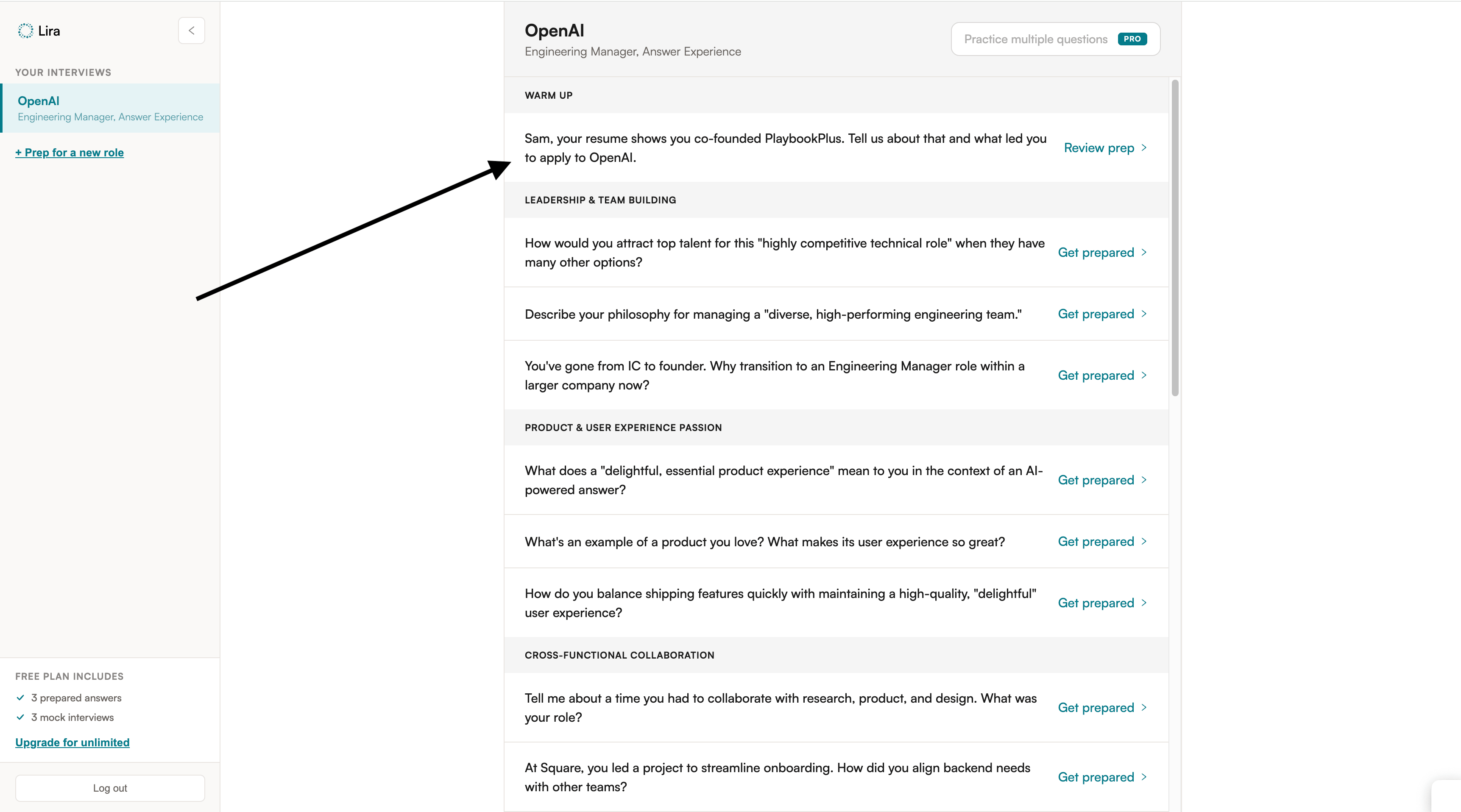
The first question I got referenced my actual background: "Sam, your resume shows you co-founded Playbook Plus. Tell us about that and what led you to apply to OpenAI." That feels like it could actually come up. Generic question banks don't do that.
The mock and the feedback
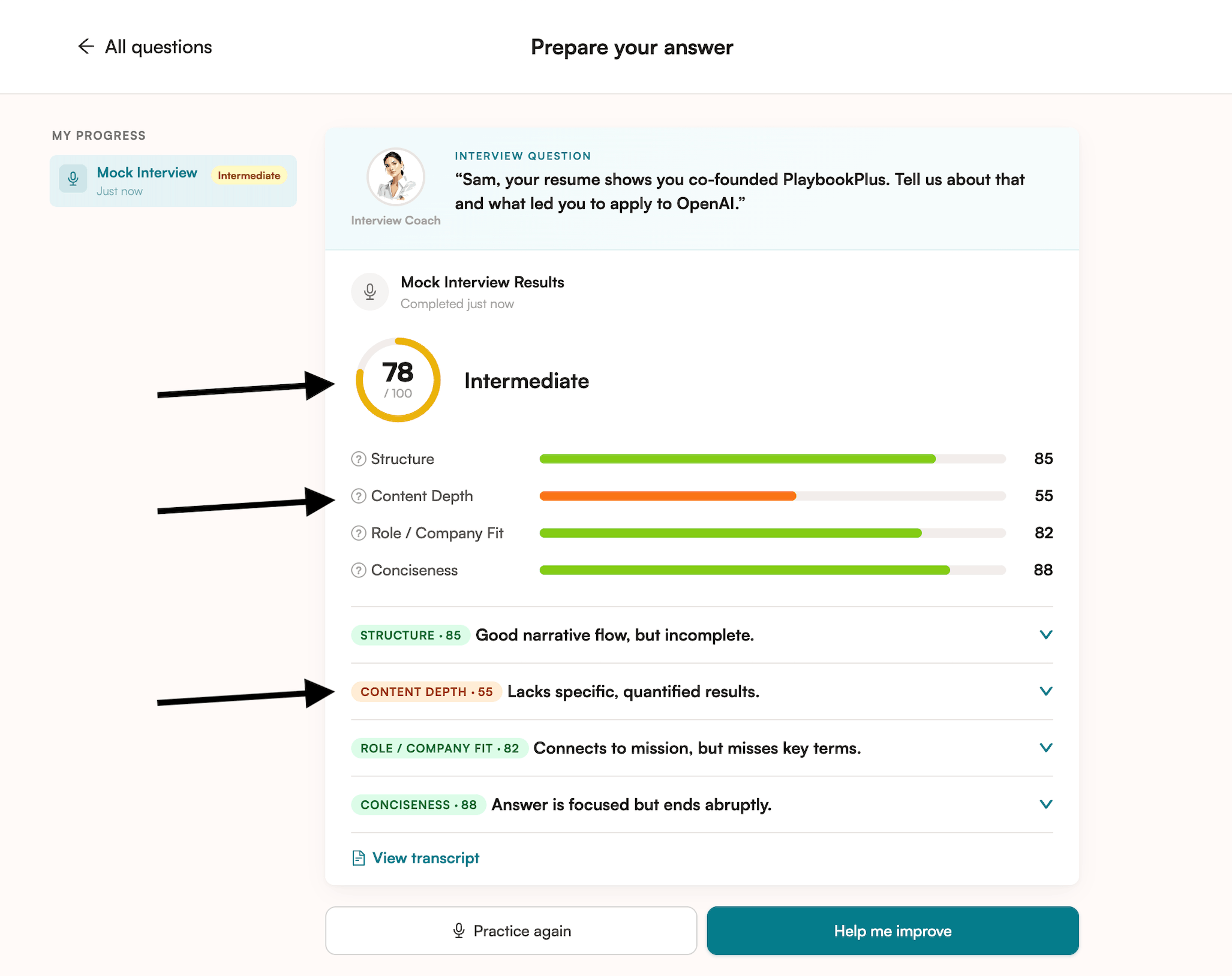
The mock is voice-based and framed as a coach, not just an interrogator. You can ask for help mid-answer, which matters if you freeze. After you answer, you get a feedback page scoring you on Structure, Content Depth, Role/Company Fit, and Conciseness, each clickable to drill in.
The improvement loop
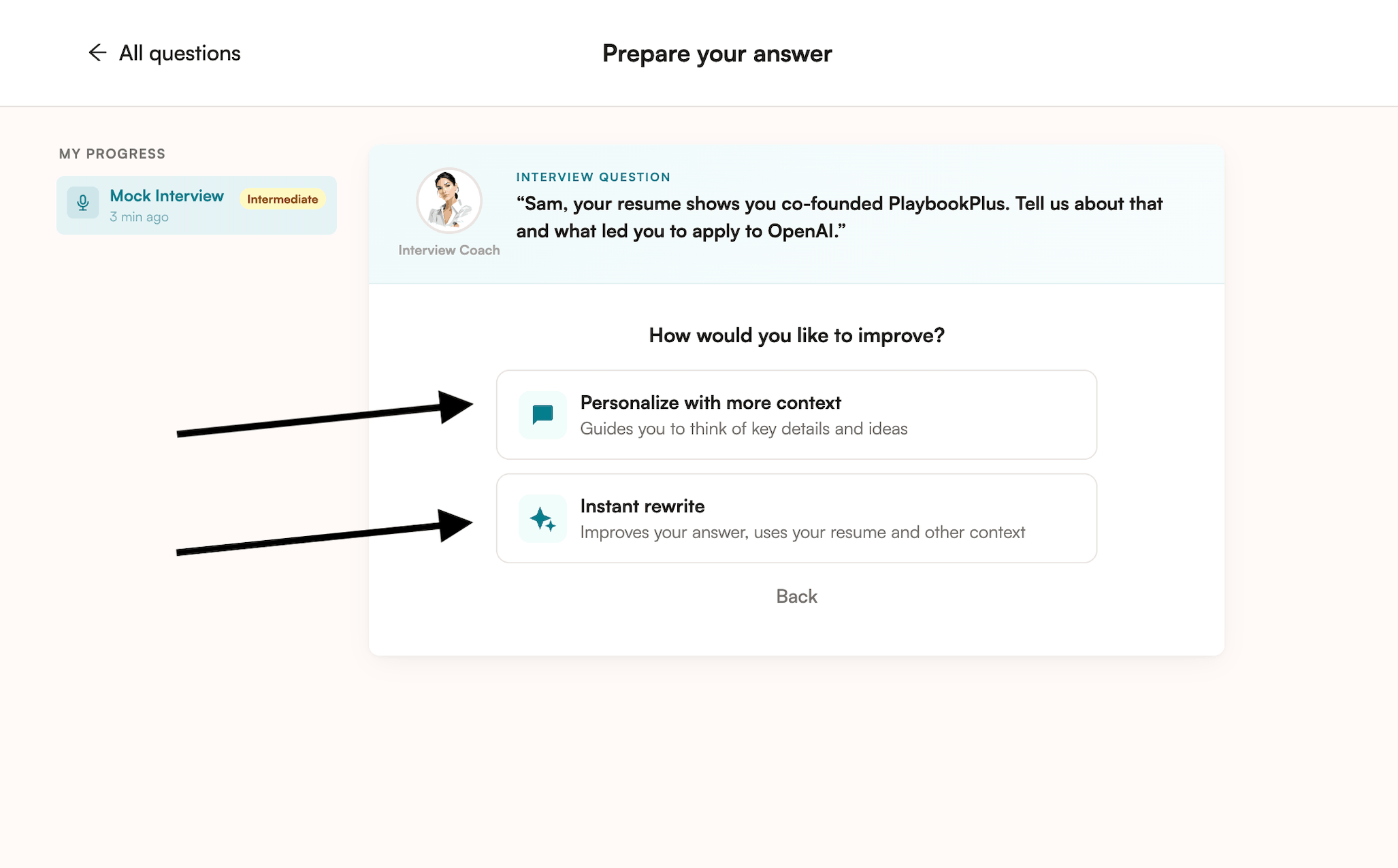
You can have Lira rewrite your answer instantly, get a cheat sheet of key points, and re-practice the question without hints. That last bit is my favorite part. You're walked from "novice" to "advanced" with a path you can actually use.
Where it falls short
The free plan caps you at 3 mock interviews and 3 prepared answers, so you can taste it for free, but a real end-to-end mock needs the paid plan. There's no video recording of you. So if you want to watch your mock interviews on video, Lira might not be the right tool for you.
- Questions feel real and personal, not stock.
- Coach-style mock lets you ask for help mid-answer.
- Closed loop from feedback to rewrite to re-practice.
- Free tier is just enough to get a feel for the product.
- No video recording of your mock interviews.
2. MootWise
The setup actually reads your resume
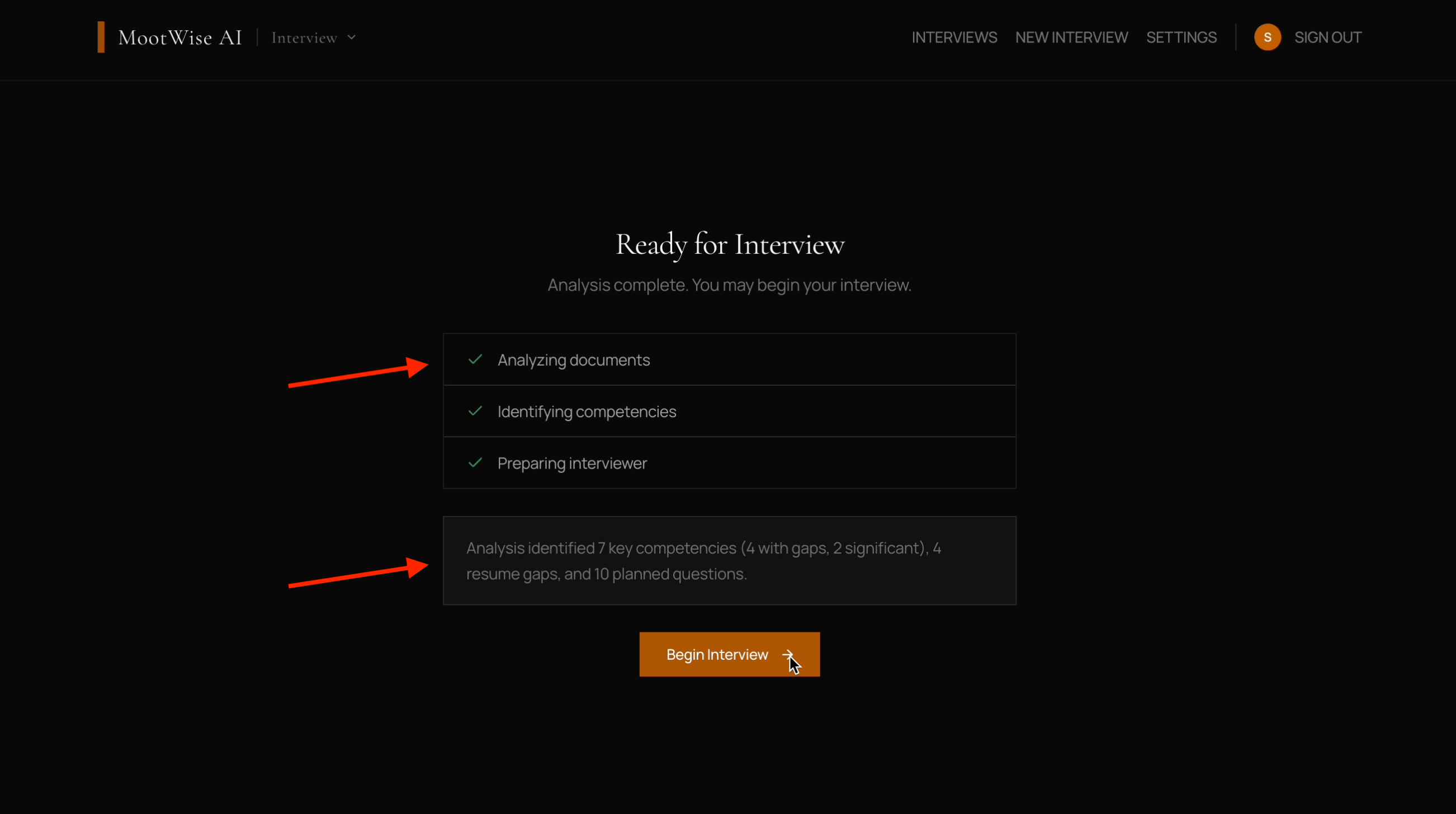
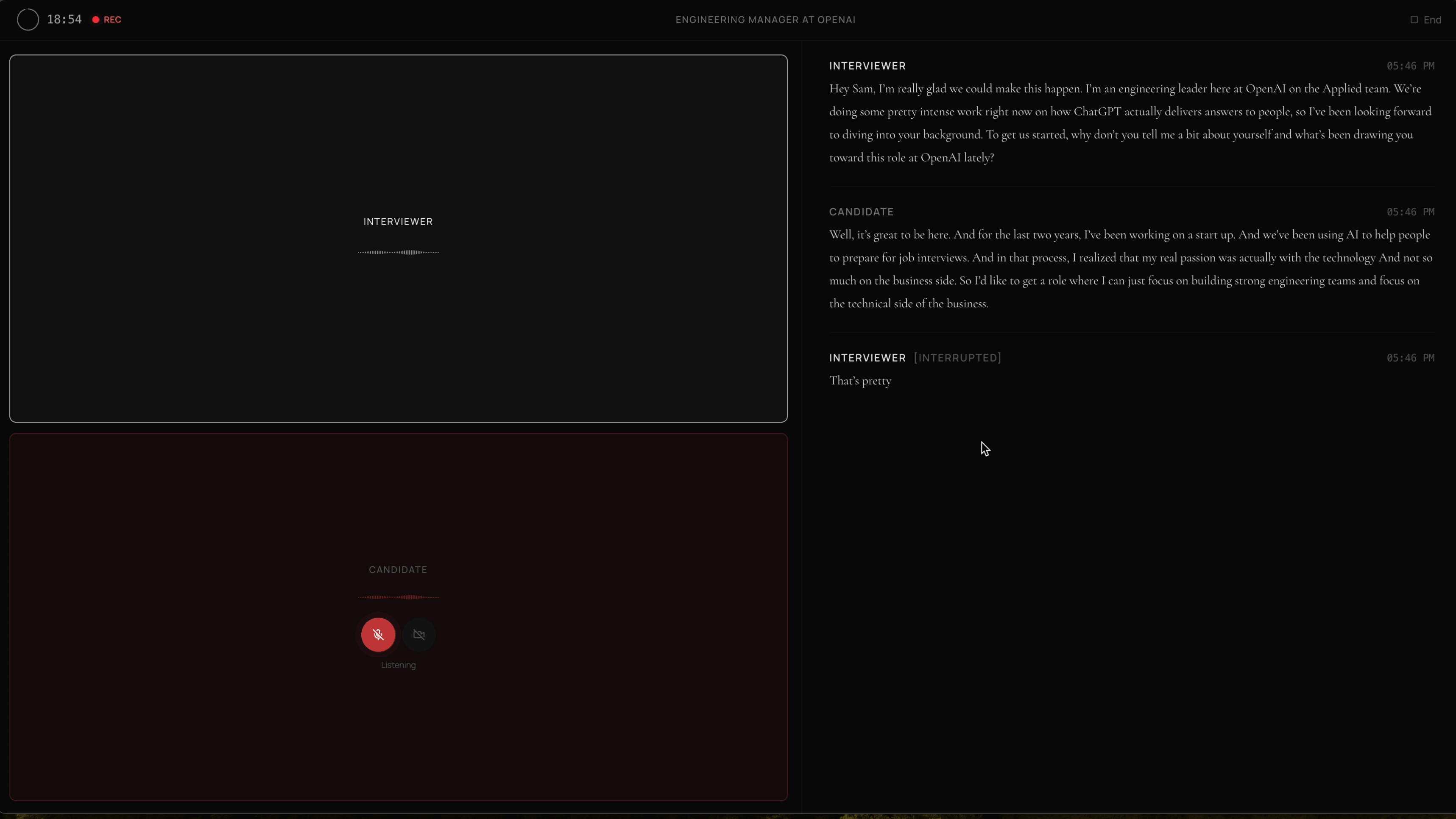
I uploaded my resume and the OpenAI engineering manager JD, and MootWise spent a moment "preparing the interviewer." It came back with 7 key competencies, 4 with gaps (2 significant), 4 resume gaps, and 10 planned questions. A real signal the AI parsed the documents instead of pretending to.
The voice was the standout
The interviewer opened with: "Hey Sam, I'm really glad we could make this happen... why don't you tell me a bit about yourself and what's been drawing you toward this role at OpenAI lately?" Warm, conversational, low pressure. It actually calmed me down. The follow-up caught a real inconsistency between my claimed leadership experience and my listed titles, and asked about it.
Feedback is dense, maybe too dense
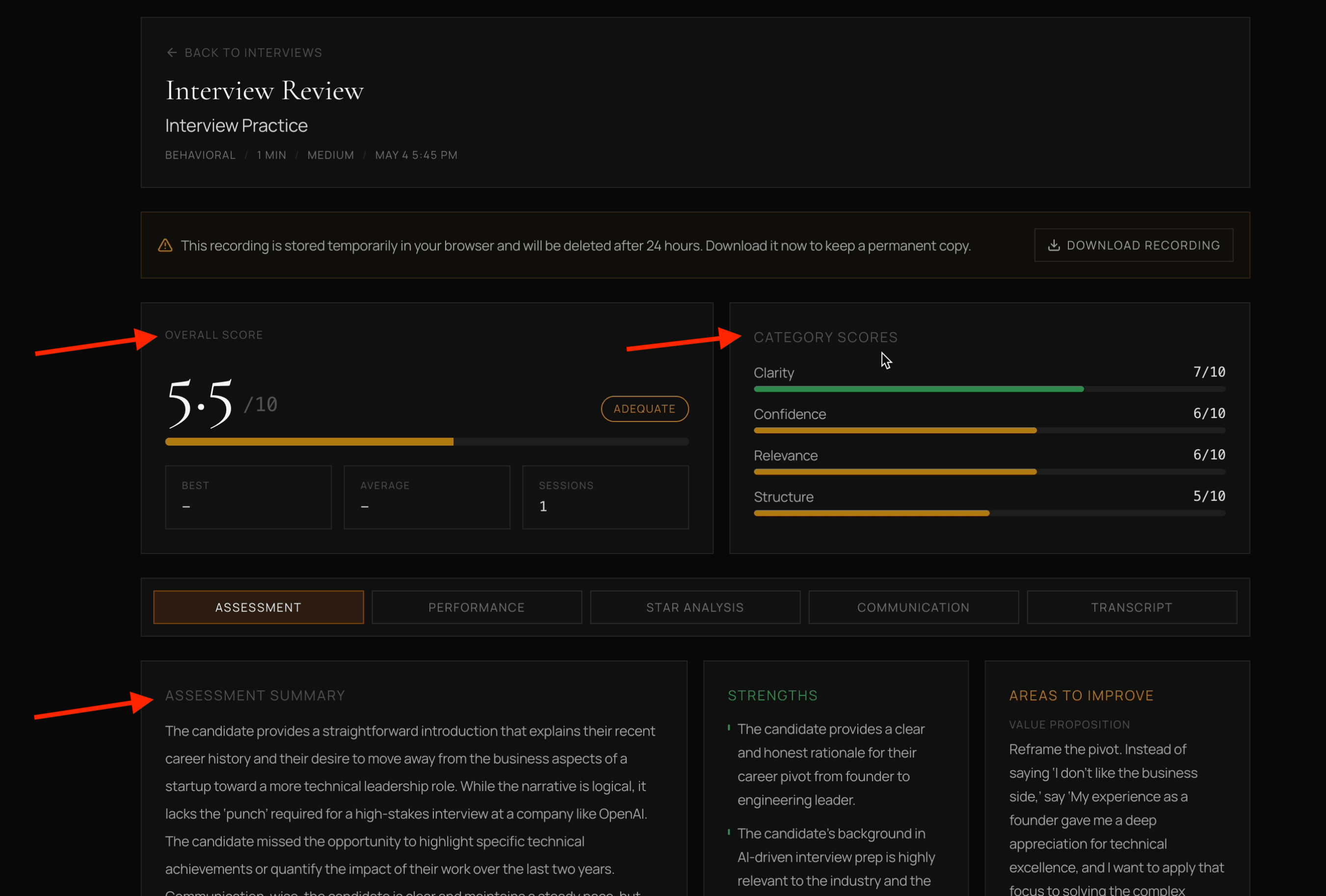
You get scores across Clarity, Confidence, Relevance, and Structure, plus filler words, STAR analysis, strengths, and improvements. It's a lot. There's no clear "fix this first" priority. And critically: the feedback tells you what's wrong but doesn't help you build a better answer.
You can't drill on one question
To re-practice a single question, you have to restart the whole interview from the beginning. Significant friction.
Pricing
20 minutes free, then $6 for 30 minutes. Case interview support is also offered, which is rare and worth knowing if you're prepping for consulting.
- Calming, realistic voice that lowers practice anxiety.
- Pre-interview competency analysis shows the AI read your stuff.
- Supports case interviews, which most competitors don't.
- Feedback is overwhelming and unprioritized.
- No help rewriting your answer based on the critique.
- Can't re-drill a single question without restarting.
3. Bossed
The setup is well-built
Bossed pitches voice-powered mock interviews with feedback across communication, culture fit, problem solving, and technical ability. The onboarding asked me about the role, when my interview was, my confidence level, the question style that trips me up, and the salary I wanted.
Then it tried to scare me
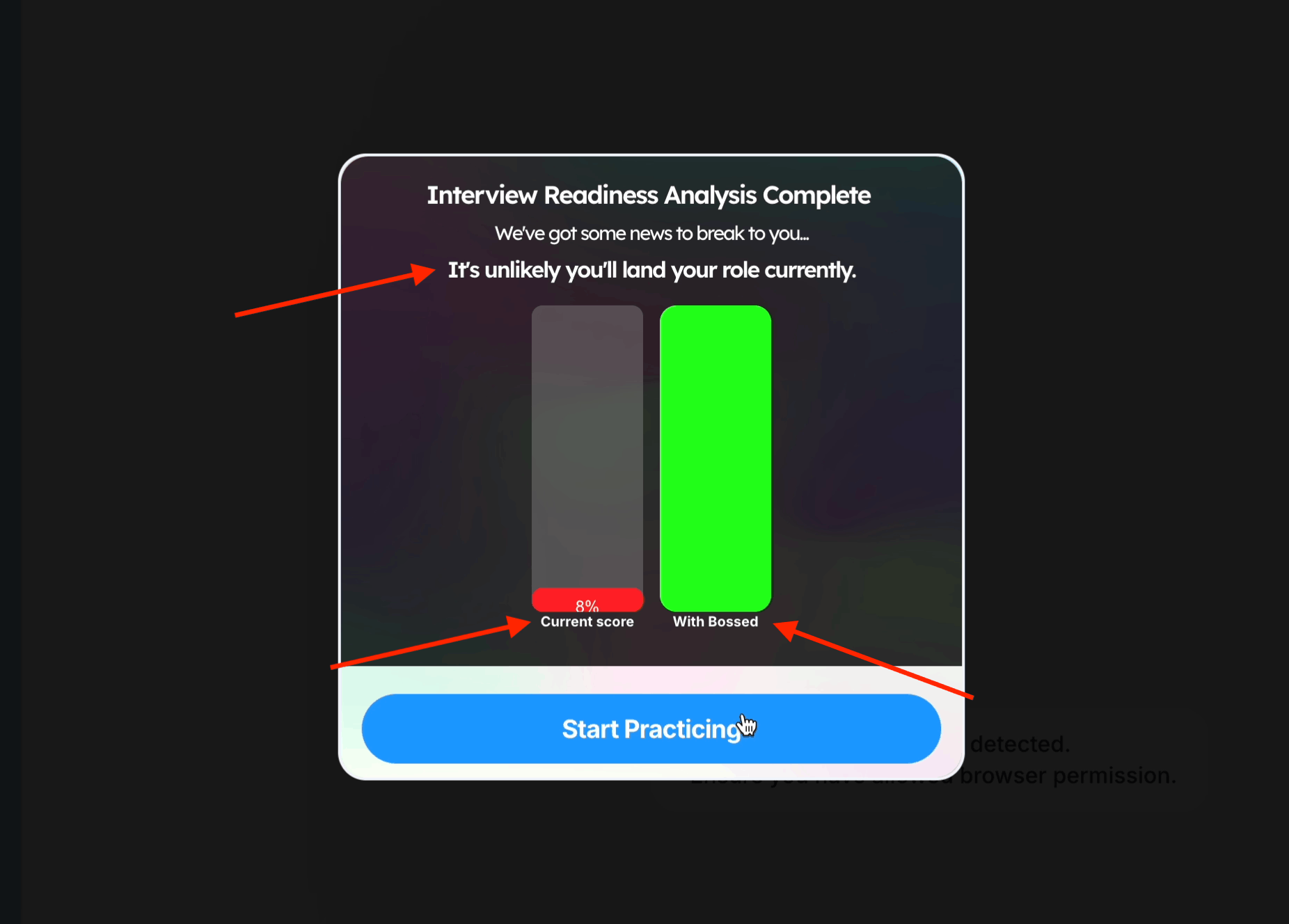
Then it showed a "readiness analysis" claiming I had an 8% chance of landing the role without Bossed. They hadn't heard me speak yet. That was a bit much.
The hard paywall
I imported the job listing, uploaded my CV, picked a difficulty level, and clicked begin. Hard paywall. I could not run a single mock without paying. I tried a few ways around it. Nothing worked.
The pricing is inconsistent
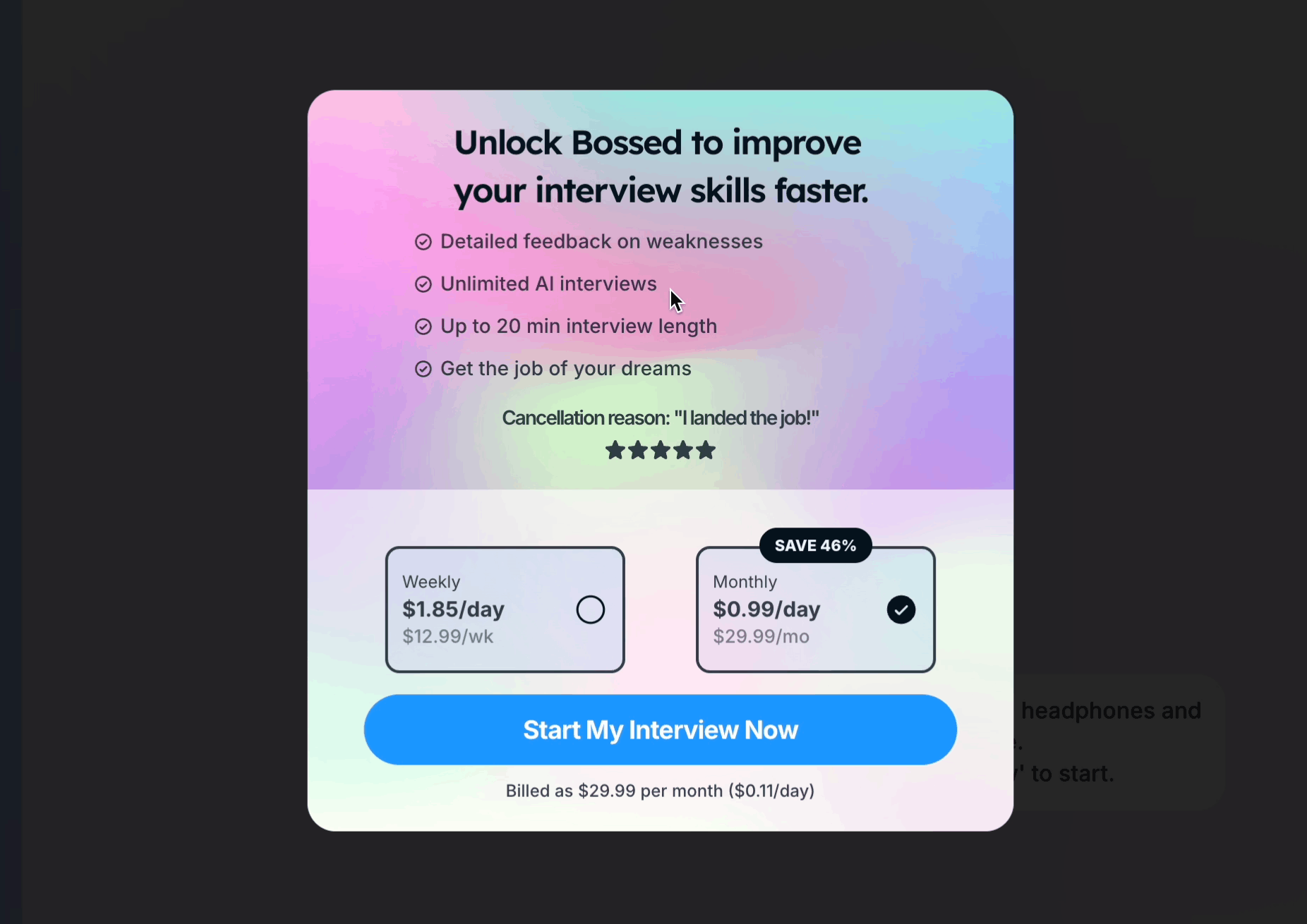
The landing page showed $20/week. Inside the product, the same thing was offered for $12.99/week or $29.99/month. Different prices on different pages is not a great look.
The verdict
I genuinely cannot tell you if the product is good. I'd be more willing to find out if I could try a single mock for free.
- Thoughtful onboarding that asks the right questions.
- Clean job-listing import via link.
- Promises feedback across four sensible dimensions.
- Hard paywall before you can run any mock at all.
- "8% without Bossed" stat shown before they've heard you speak.
- Different prices on the landing page vs inside the product.
4. Interviews.chat
What it is
Mostly a live interview copilot, with a mock interview feature attached. Their headline is real-time suggestions and live transcription during your actual interview. 30 free credits, then $19/month for 1,000 credits (1 credit = 1 minute of copilot or 1 suggestion).
I got dropped into a mock by accident
I went in for resume feedback and somehow ended up in a mock interview with no warning screen. I clicked generate on the resume feedback flow and the next thing I knew the AI was asking me a real question.
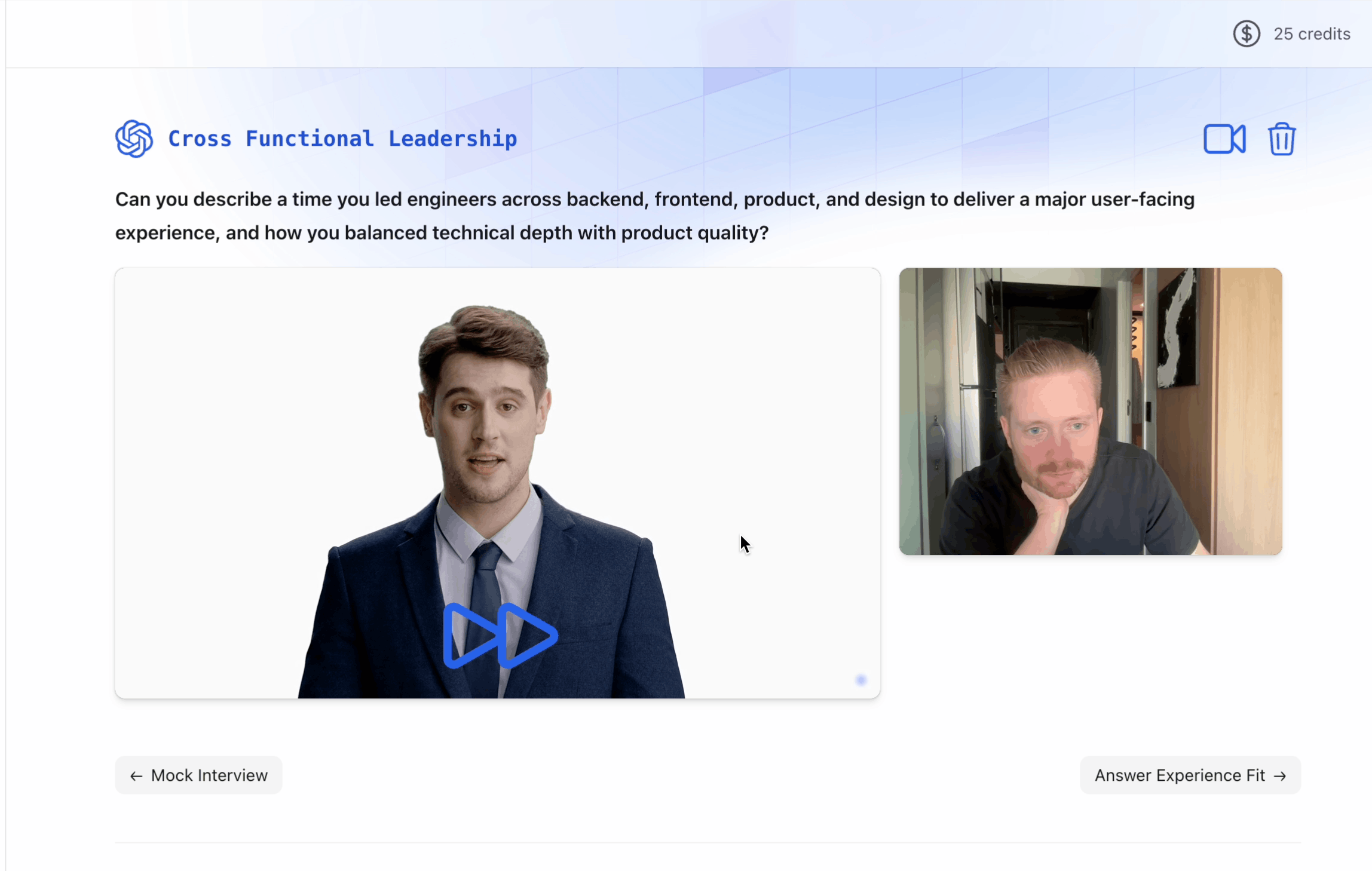
What's actually good
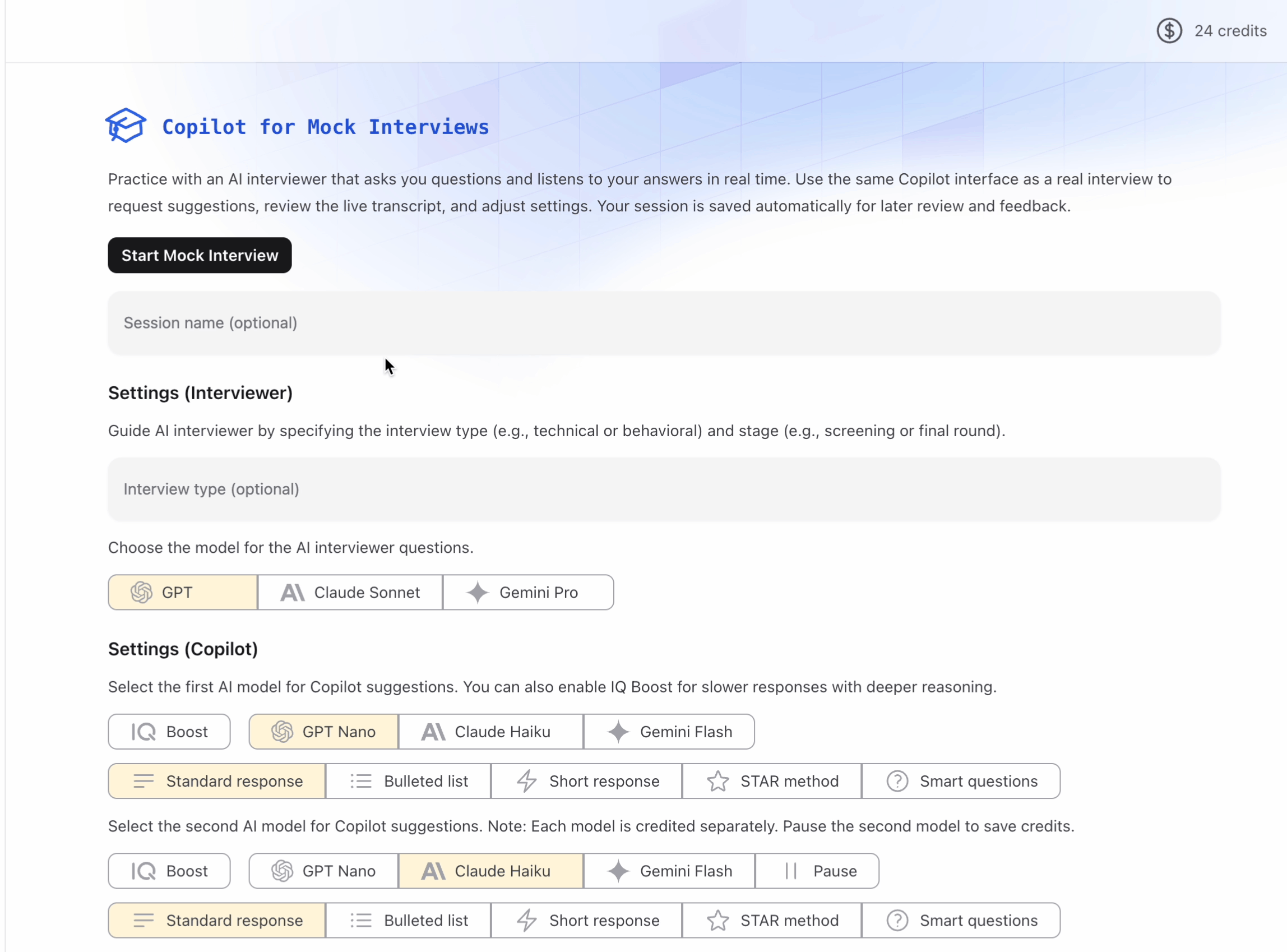
Two things stood out. After my answer it gave me a "model answer" to compare against. Final Round and Yoodli don't do this. And you can configure copilot output formats (STAR, bulleted, short response).
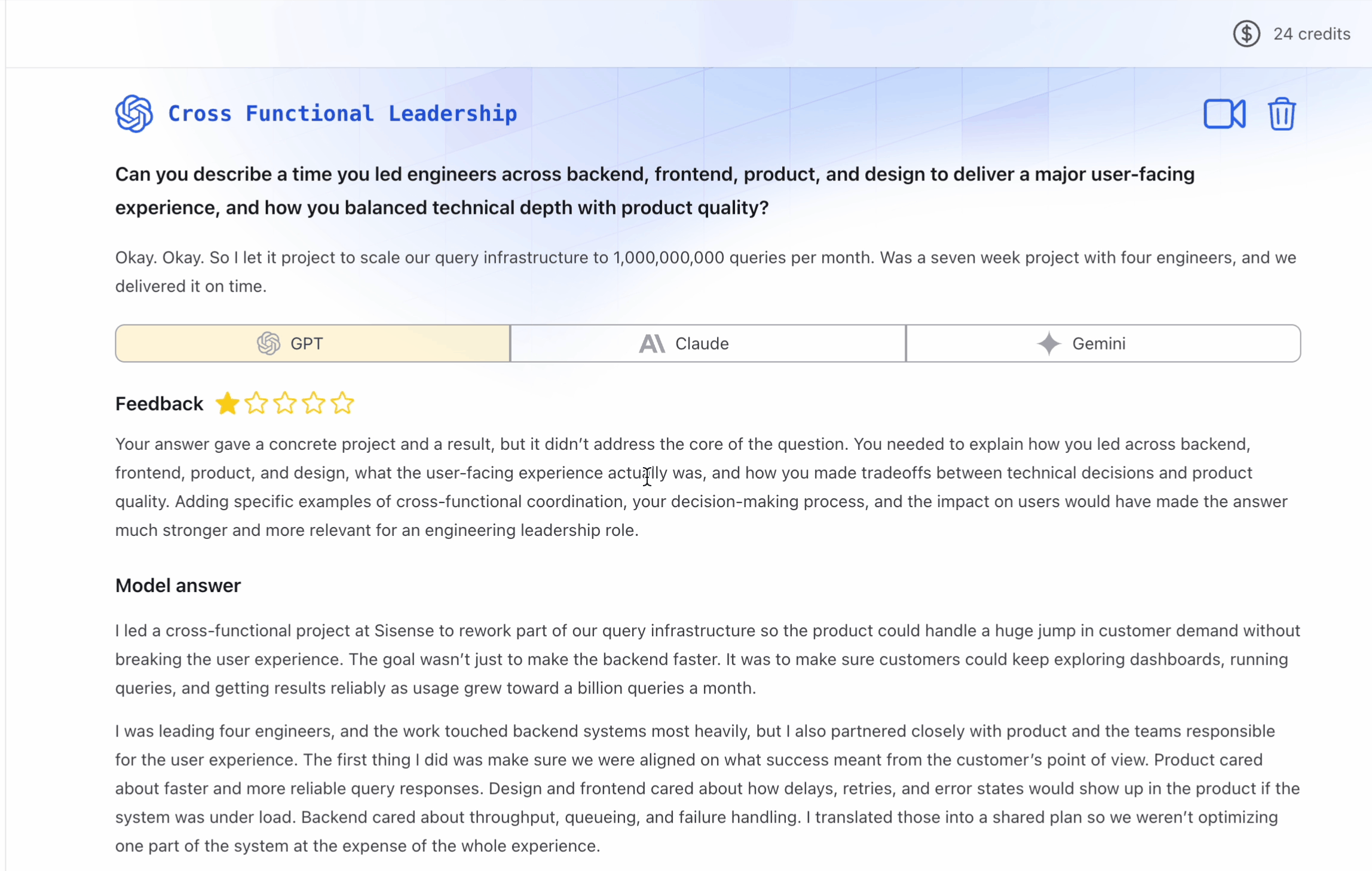
Some minor UX quirks
The product asks you to pick the AI model, twice. Resume input is paste-only, and the paste failed for me on the first try. Recorded video auto-plays when you land on the feedback page.
The standout: language support
About 33 supported languages. If English isn't your first language, this is the most credible option I tested.
- Gives you a model answer to compare against.
- Records your video so you can watch your delivery.
- Strong language support, around 33 languages.
- Rough UX, including no warning before mocks start.
- Model answers can fabricate details not in your resume.
- Feedback is a star rating and a blurb, not structured.
5. InterviewsBy.AI
Lowest friction of the bunch
Paste a job description, click "try for free," done. No signup wall. The landing page even has a working preview widget. Of all the tools I tested, this one was the easiest to start.
Resume upload is paywalled
Right at the moment you'd want to test how well it personalizes to you, you hit a Pro paywall on resume upload. So my whole free test ran without any candidate context.
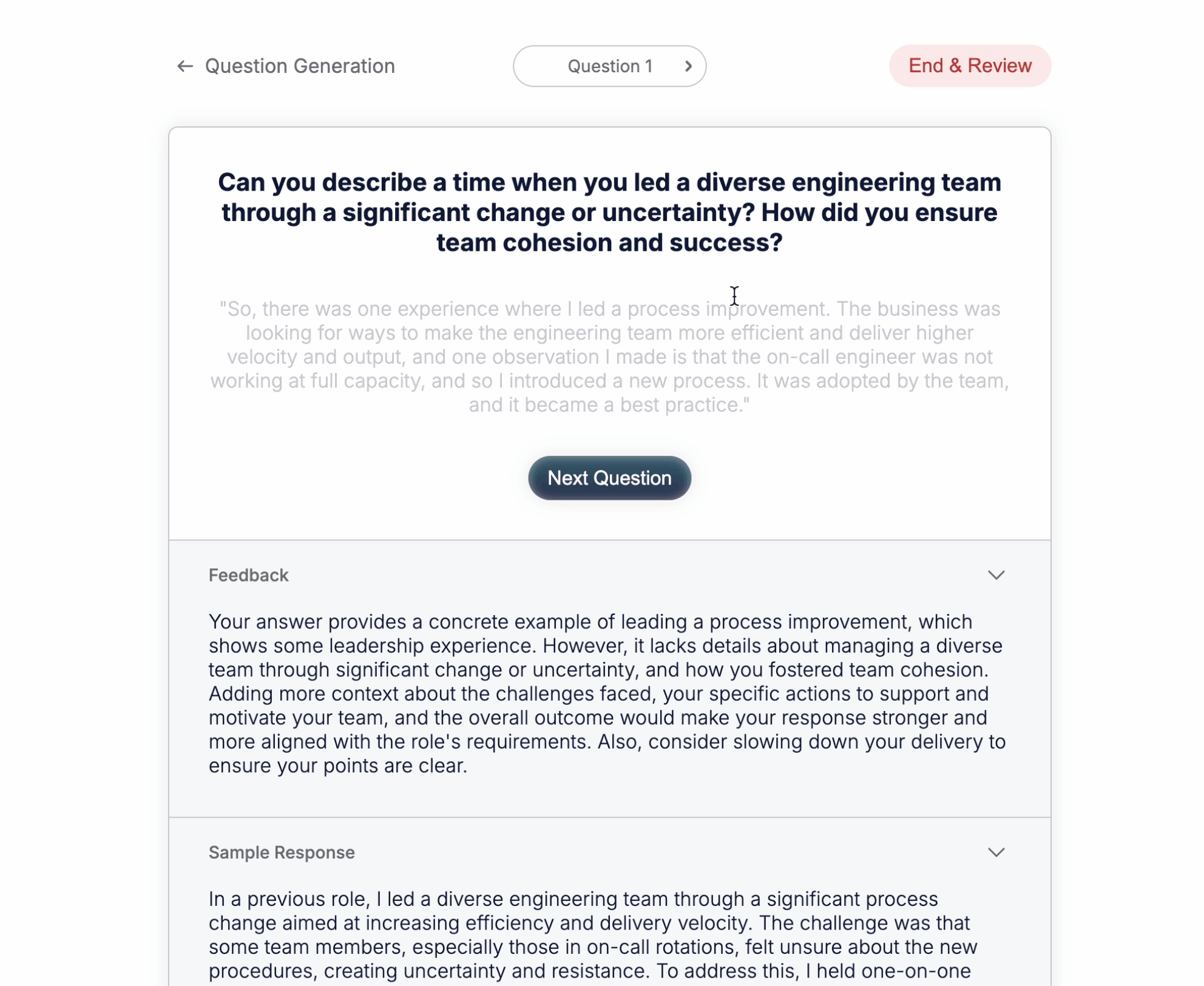
One question, no follow-ups
I got one heavy behavioral question right out of the gate. I answered. The AI gave feedback. No follow-up question. No probing. Just one shot. The toggle to view other generated questions wasn't clickable on the free tier.
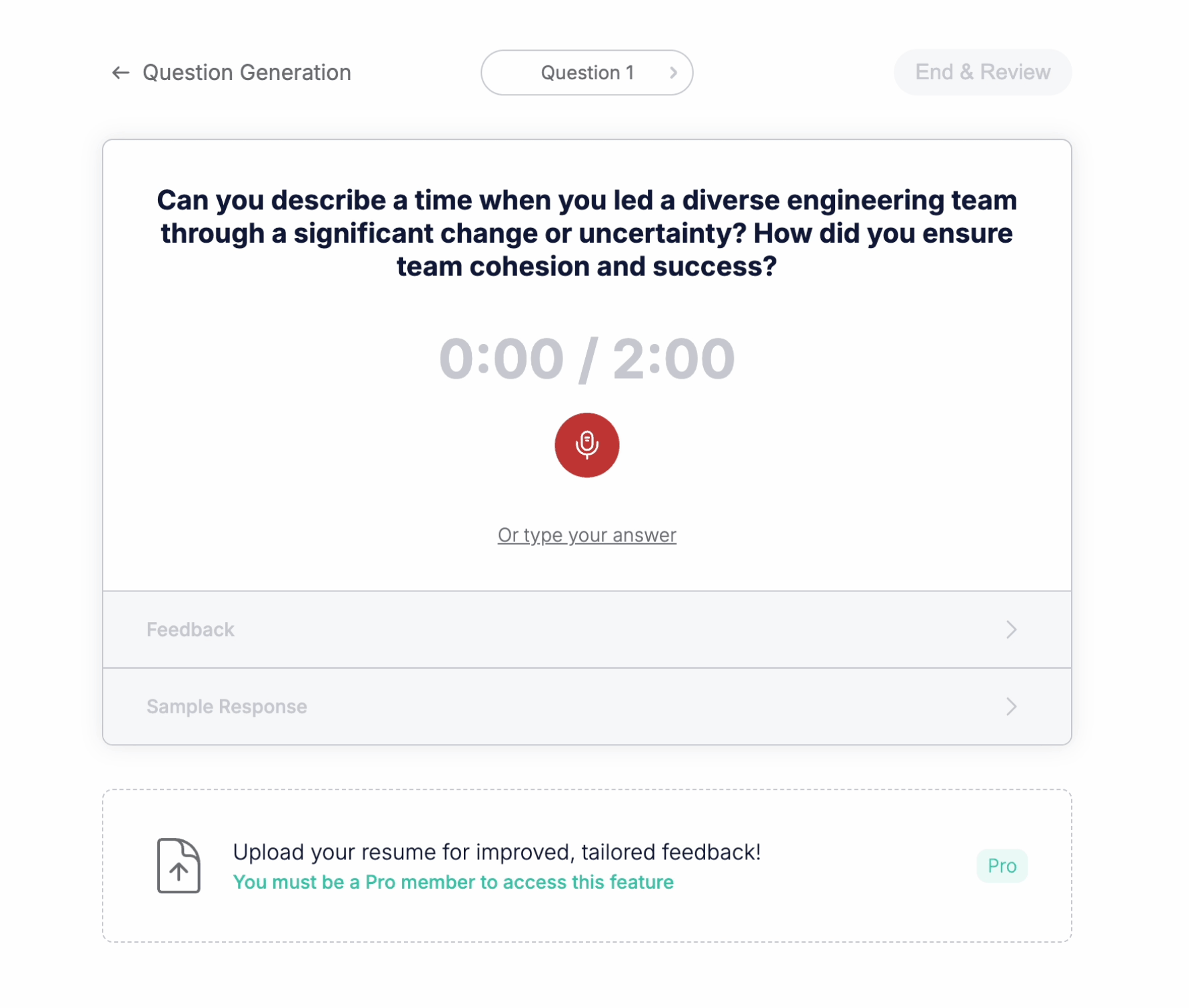
The feedback is short
About five sentences plus a sample answer. No score, no breakdown. The sample did seem to build on what I actually said, which is a small but real plus. No way to edit it or layer in more details.
Pricing
Free tier is 3 questions per month with the 2-minute cap. Pro unlocks resume upload, longer responses, and more questions, but I couldn't capture the exact price during the test.
- Easiest tool to try, no signup needed.
- Sample answers build on what you actually said.
- Typing option may help if you freeze up speaking.
- No voice modality, which is a serious gap for interview prep.
- No follow-up questions; every prompt is one-shot.
- Resume personalization paywalled; can't evaluate quality.
6. Yoodli
It's a general purpose AI roleplay tool
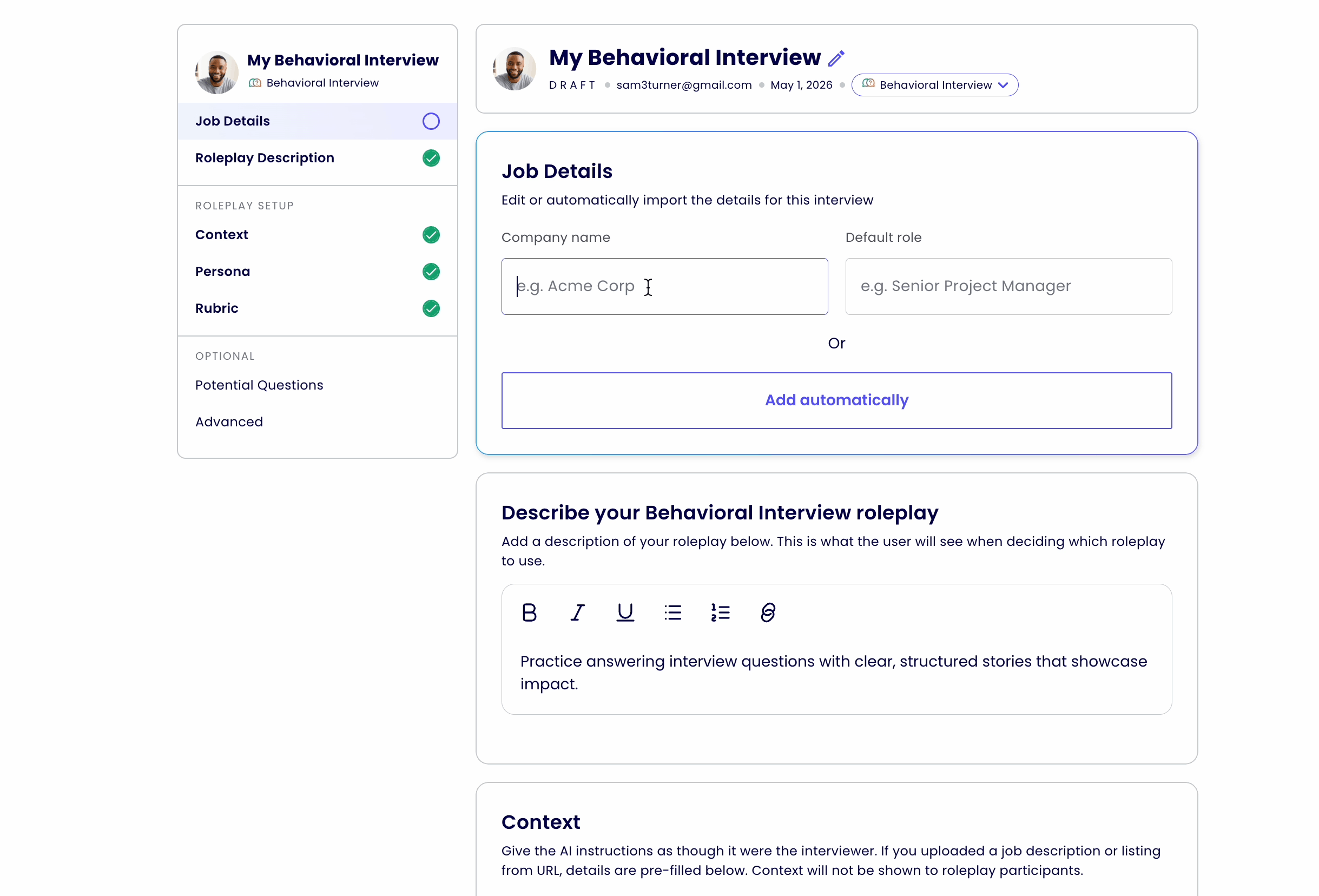
Yoodli is a general purpose AI roleplay tool built for sales onboarding, manager training, and pitch certification. Interview prep is on the menu, just not the headline. You can tell. The setup screen at one point said "this is what the user will see when deciding which roleplay to use," which is wording for someone building a roleplay for their team, not someone practicing for tomorrow's interview.
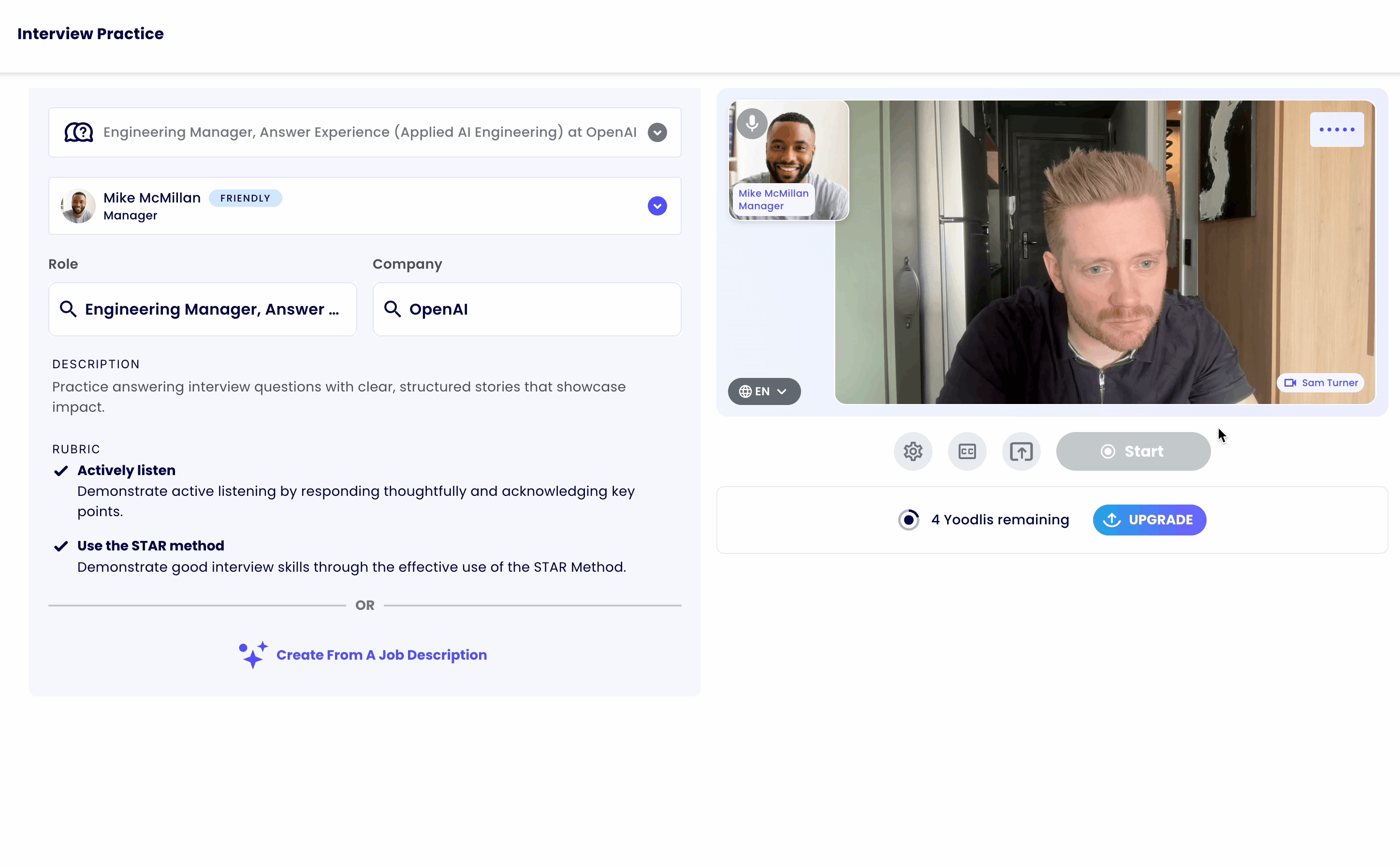
The mock itself is good
The AI interviewer (mine was named Mike) opened conversationally and the follow-ups felt responsive to what I'd actually said. You're on webcam the whole time, which mirrors a real video interview better than voice-only.
The feedback is the standout
I got a 42% score, breakdowns for active listening, STAR usage, filler words, conciseness, weak words, sentence starters, and tone, plus a "fun fact" telling me 33% of my sentences started with "so." That last one was useful. I had no idea I did that.
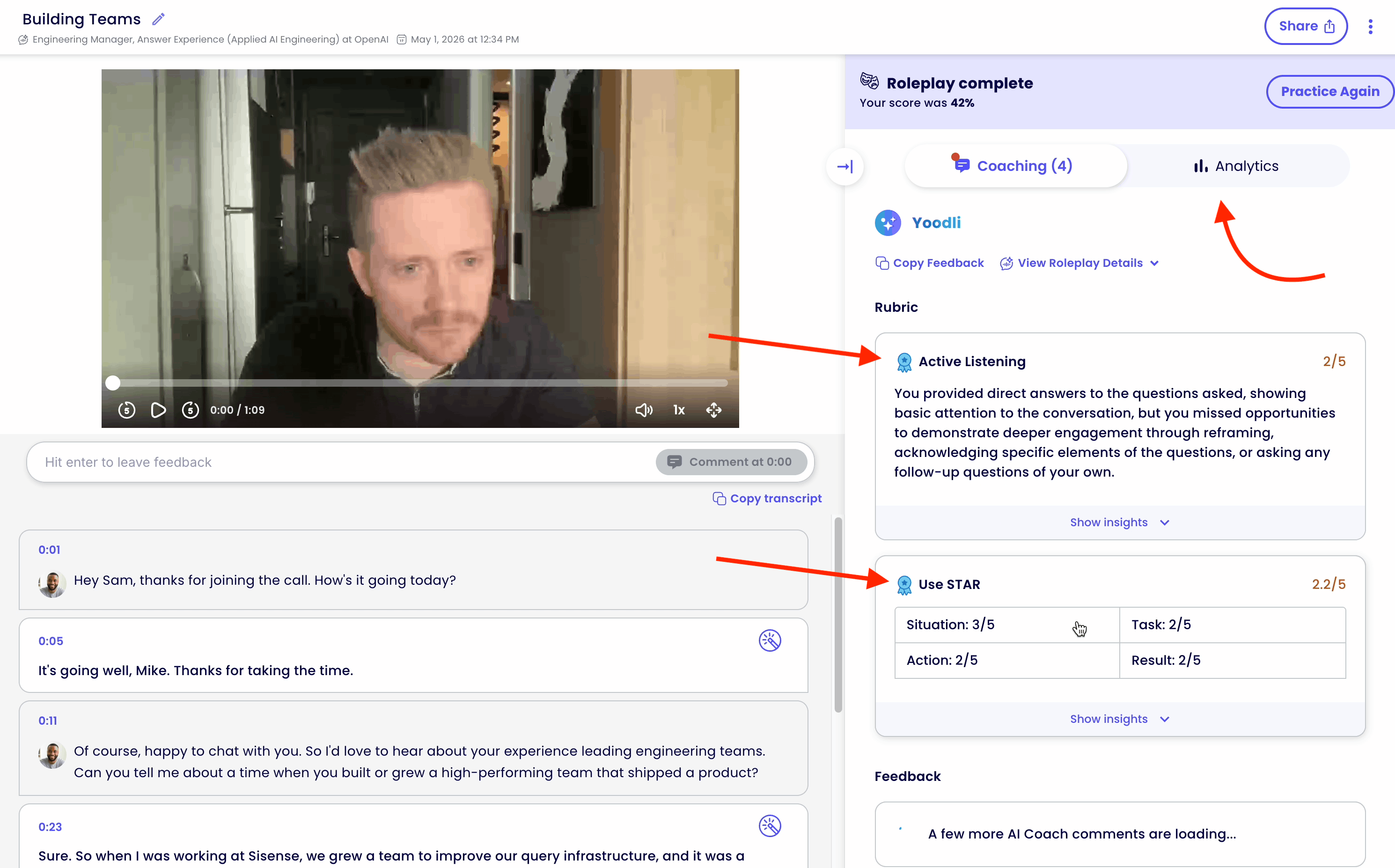
But it's a lot to wade through
The feedback is voluminous and not prioritized. Some of it ("active listening") is more sales-conversation metric than interview metric. Yoodli also has a screen-sharing roleplay mode, which is rare and useful if your interview involves walking through a portfolio.
Pricing
Free trial of 5 roleplays, Starter at around $11/month, Pro at $28/month. Starter gives you 10 roleplays per week.
- Realistic webcam mock with dynamic follow-ups.
- Concrete delivery insights (filler words, sentence starters).
- Screen-sharing roleplay mode is uniquely useful.
- Built for enterprise; the candidate flow leaks admin language.
- Feedback is voluminous and not prioritized.
- No help building or refining your actual answers.
7. Final Round AI
The headline is the live copilot
Final Round's flagship is "Interview Copilot Stealth Mode," advertised as 100% undetectable to interviewers and delivered through a desktop app. Mock interviews are also available, and the free tier gives unlimited mocks, which is generous on paper.
Setup was rough
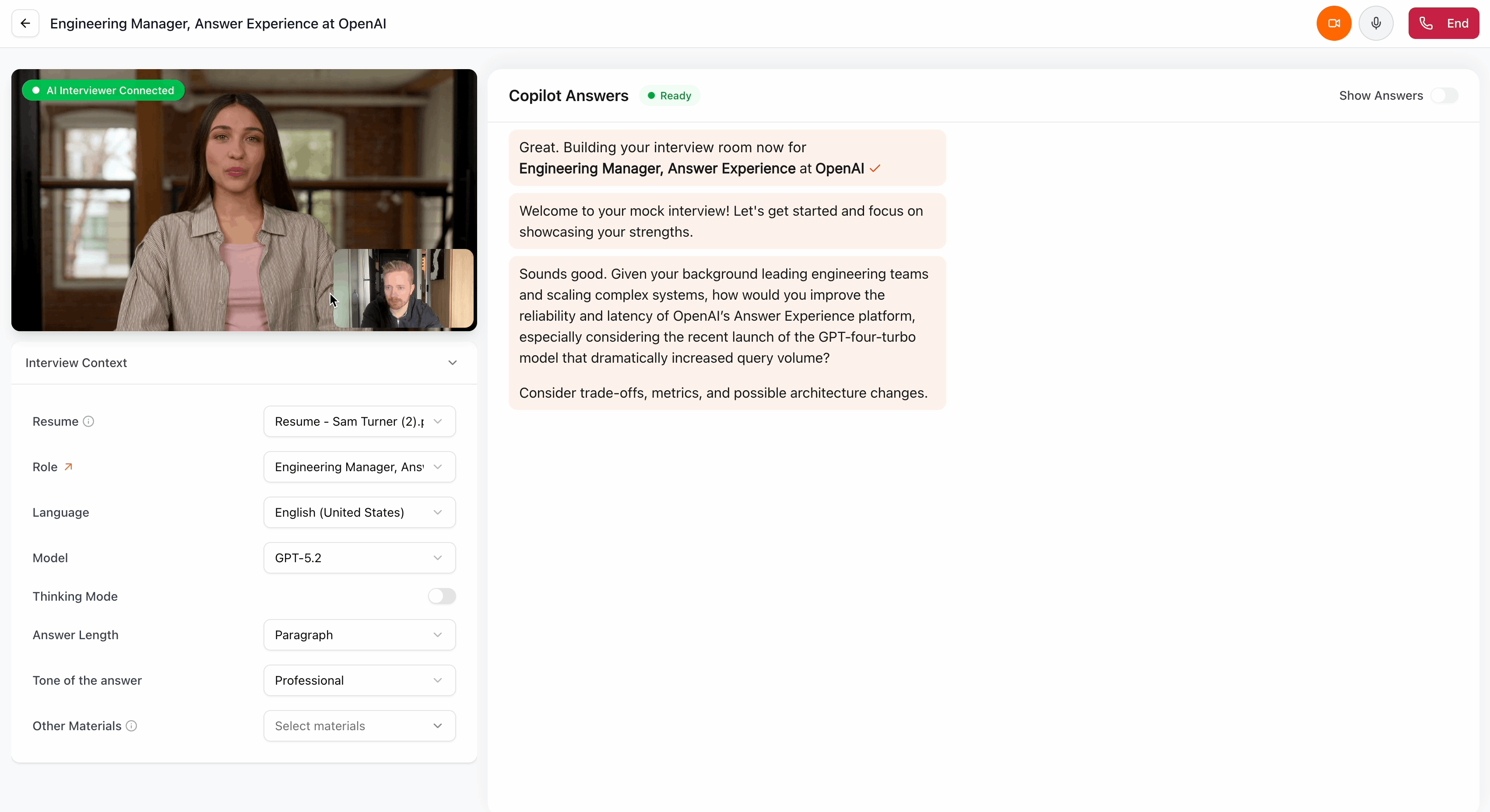
I clicked Mock Interview and got a panel saying "no resumes found" and "no roles found" with no obvious next step. Resumes and roles live in a separate "Get Started" area I had to hunt for. The LinkedIn import threw an error on a perfectly valid URL, and the error vanished before I could read it. I uploaded the resume manually instead.
The mock itself was intense
The opening question was a multi-part system design prompt about scaling OpenAI's Answer Experience platform during the GPT-4 Turbo surge. As an opener. I ran it twice and got another aggressive scaling question. There's no preview, no question selection, no difficulty slider, no custom questions.
The feedback that never came
The AI signed off with: "I'll compile a brief summary of your strengths, improvement areas, and suggested practice." No summary appeared. I went looking. Ran a second mock to double-check. Still nothing. The free plan is supposed to include a "basic AI interview report." I did not see one. Bug or paywall, I don't know. Either way, the most useful part of doing a mock is the feedback, and I never got it.
Pricing
Steep: $150/month, $300/year, or $500/year for Premium Max. The 3-day money-back guarantee has carve-outs (monthly plans non-refundable, "excessive" usage can disqualify you, renewals not refundable). Read carefully before paying.
- Realistic video mock with strong personalization.
- Rich configuration options (answer length, tone, model).
- Unlimited mock interviews on the free plan.
- Promised feedback never appeared in my testing.
- Setup is non-intuitive; LinkedIn import looks broken.
- Expensive, with restrictive refund terms.
8. LockedInAI
It's built for big tech engineers
Four of LockedInAI's five flagship features are live-assist tools. The mock interview studio is one feature among them, not the centerpiece. Customer logos are Uber, Google, Meta, Microsoft. The placeholder example role is "senior front-end engineer." If you're not in big tech, you'll feel it.
Onboarding is heavy
Long flow: language, mic, quick-setup vs custom, role/company/objective, "Q&A preparation" where you pre-fill questions and answers, resume upload, then a step asking you to install a browser extension. The Q&A pre-fill step felt like a lot of work just to try a mock.
Launching a mock was hard
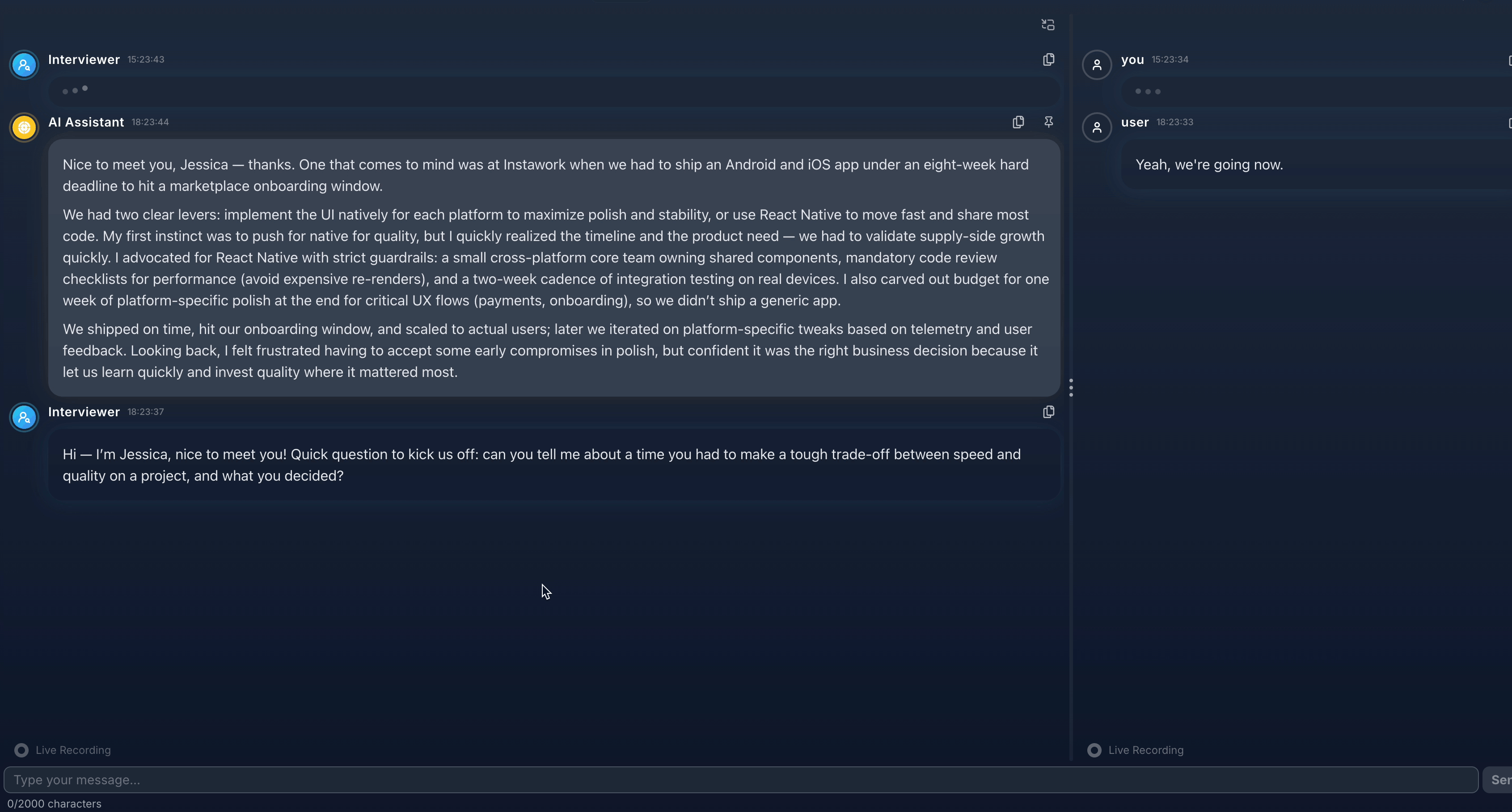
The product kept dropping me into the Copilot interface. Screen sharing was required and failed multiple times. Eventually I figured out that system audio also had to be enabled, which wasn't signposted.
The two-AI mock setup
One AI (Jessica) asks the question. A second AI generates a suggested answer in real time, drawing from your resume. Jessica's follow-ups were genuinely good and probed real specifics. But the suggested answer drifted. By the second follow-up, the Copilot was attributing technologies to a project where I hadn't actually used them. It also surfaced an experience from eight years ago I wouldn't have used. Reading the AI's draft felt like reading a script, not like remembering what I did.
The feedback is paywalled
Transcript is free. Summary and report are behind a $54.99/month plan ($40/month for 3 months, or $1,500 lifetime). I can't tell you if the feedback is good. You have to pay before you find out.
The standout: language support
Six interview languages (English, Spanish, French, German, Italian, Portuguese), with more options for the AI response language.
- Strong multilingual support.
- Follow-up questions probe real specifics.
- Resume-aware answer drafting (when it's accurate).
- Mock interview feedback is paywalled.
- Drafted answers drift from your real experience.
- Setup is heavy and pushes you toward the live Copilot.
How to pick
If you want one recommendation, here's how I'd slice it.
| If this is you... | Start with |
|---|---|
| You have a specific job lined up and want personalized prep that helps you actually rewrite weak answers, not just critique them. | Lira |
| You want just want a realistic full-session mock interview, and you're prepping for case interviews. | MootWise |
| You specifically want to watch yourself on video to fix delivery habits (filler words, pacing, eye contact), or you have an interview that includes a presentation or screen share. | Yoodli |
| You learn best by reading strong sample answers, and English isn't your first language. | Interviews.chat |
One more thing
If you take nothing else from this post: the tool matters less than the practice. The candidates I see do best are the ones who run two or three mocks, sit with the feedback, rewrite their answers, and run two or three more. Pick whichever of the best AI interview prep tools fits your situation, and actually use it more than once.
If you'd rather just start practicing right now, you can run a free AI mock interview in your browser — no sign up, no credit card. Tell it your role, pick a question, and answer out loud to see how it feels before your real interview. (If you used to rely on Google's Interview Warmup, it's also a free Interview Warmup replacement.)
Reviews conducted personally by Sam, founder of Lira. Pricing and feature claims were accurate at time of testing.